Comment devenir créateur UGC : le guide complet 2026
Résumé
Un créateur UGC sans audience peut facturer 75 à 1500 euros par clip selon son expérience. L'équipement minimal coûte 80 à 150 euros. Portfolio, tarification transparente et plateformes de briefs UGC sont les clés pour débuter. Trois routes: plateformes spécialisées, agences créatives, prospection directe. Les meilleurs produisent 3-5 clips/semaine et analysent les performances.
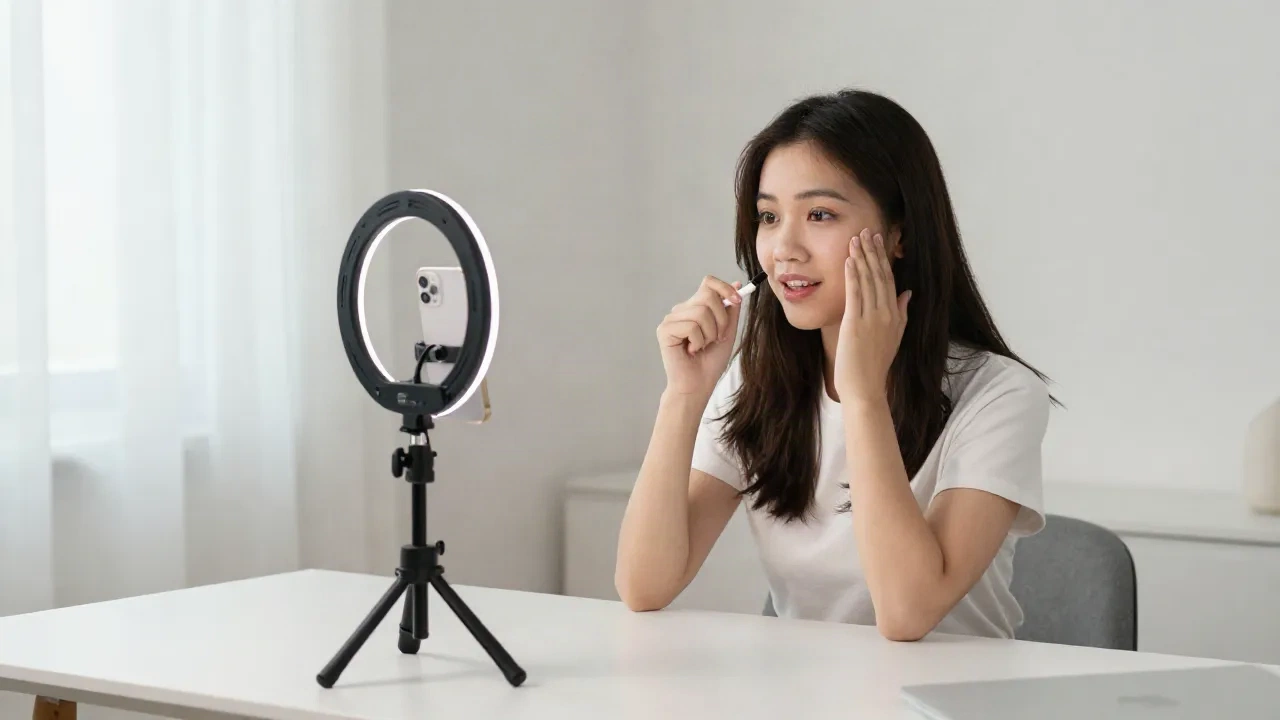
Pour comment devenir createur ugc, vous devez comprendre que c'est la voie la plus directe vers du travail payant sans grande audience. Les créateurs UGC gagnent entre 150 $ et 1 500 $ par clip vidéo, virement effectué en moins de trois jours. Les marques ne cherchent pas comment vous avez 50 000 followers ou 500 000 : elles demandent si votre clip fait convertir. Un créateur sans présence publique visible, mais avec un style visuel net et reproductible, peut signer un premier brief payant en trois semaines. Ce guide couvre le système de production exact pour 2026 : ce que les marques demandent vraiment, comment construire un portfolio sans audience, où l'IA change vraiment l'équation de production, et comment fixer ses prix dès le premier jour.
Ce que les marques paient vraiment aux créateurs UGC
Un créateur UGC ne vend pas son audience. Il vend un fichier : souvent un mp4 ou webm, durée 15 à 60 secondes, résolution 1080p, fond clair ou contraste net, personne parlant face caméra avec un produit en mains. La marque achète le fichier, pas le public.
Les tarifs réels selon le marché 2026 :
Débutants : 75 $ à 200 $ par clip
Intermédiaires : 200 $ à 500 $ par clip (avec portfolio visible de 8-15 clips)
Confirmés : 500 $ à 1 500 $ par clip (liste de clients reconnus ou volume mensuel 15+ clips)
L'option droits d'usage démultiplie ces chiffres. Vous vendez le clip brut (« creative file fee ») à 200 $. Les droits de diffusion pour annonces payantes (Google Ads, Instagram, Facebook, TikTok Ads) s'ajoutent à 150 $ à 500 $ selon le marché géographique et la durée de licence (30 jours, 90 jours, 6 mois, non limité). Une marque en Allemagne qui veut ton clip 3 mois sur tous les canaux paiera 200 $ (création) + 400 $ (droits Zone Europe) = 600 $ total.
Un test interne d'une équipe de UGC confirmés basée en France en 2025 : 12 clips/mois à tarif intermédiaire (300 $ création + 250 $ droits = 550 $/clip) = 6 600 $ mensuels brut en 60 heures de travail (tournage + script + reprise + rendu). À côté d'une chaine YouTube ou TikTok où 60 heures te ramènent 30 $ de revenue share. Aucune comparaison.
Le mythe de l'équipement : ton téléphone suffit
Le setup absolument minimal pour un UGC profitable :
Téléphone : n'importe quel flagship 2023-2024 (iPhone 14 ou 15, Samsung S23/S24, Google Pixel 7/8). Les marques regardent le contenu en
720pou1080p: au-delà de 1080p, elles ne voient pas la différence et refusent des fichiers trop lourds.Pied : trépied basique 25 $ à 45 $ (Amazon Basics, Neewer). Rangement clé : la caméra doit être fixe : zoom ou tremblement cassent 90% de vos clips.
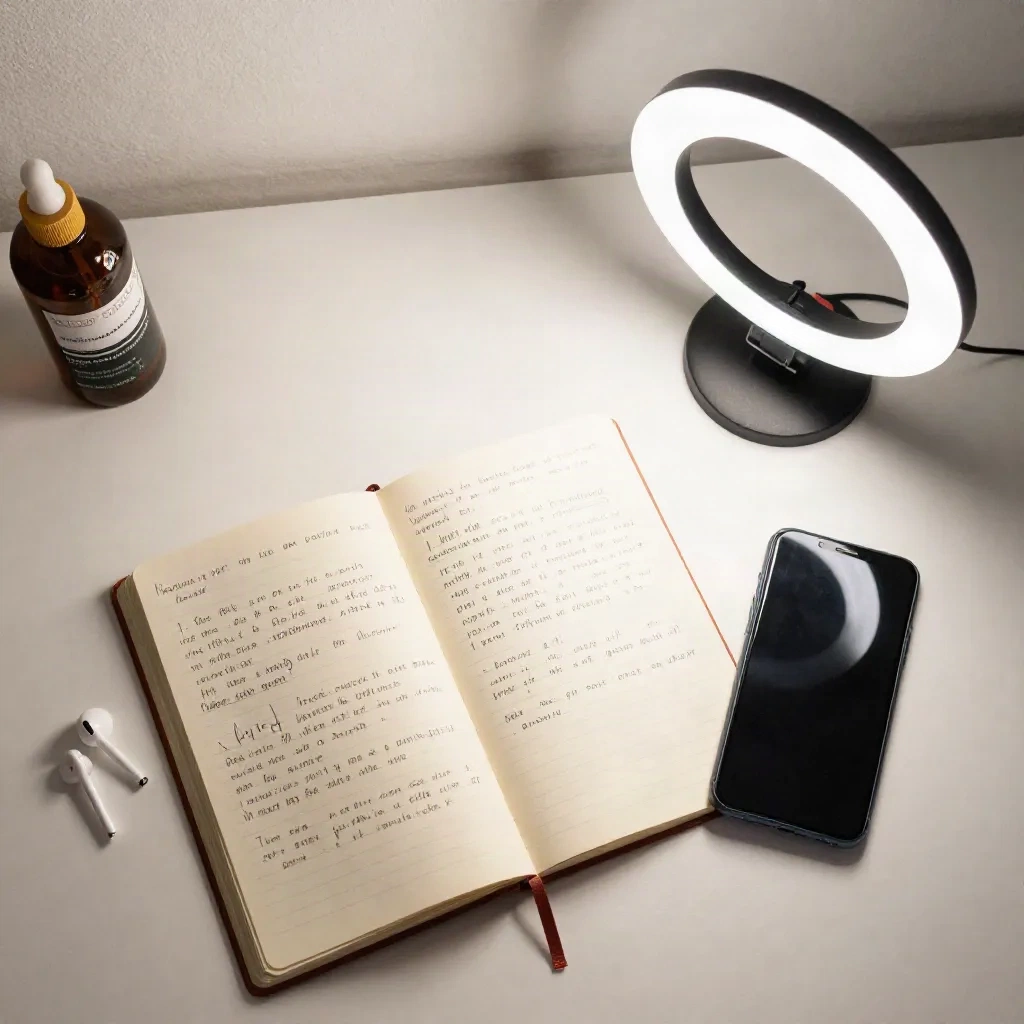
Lumière : ring light 40 $ à 80 $ (Neewer, Falcon Eyes). Une lumière de face ; les marques rejettent les contre-jours ou éclairages d'ambiance.
Arrière-plan : tissu uni blanc ou gris (lit blanc, mur blanc, drap blanc). Aucune distraction derrière toi.
Audio : le micro du téléphone suffit si ta pièce est silencieuse. Sinon, micro cravate filaire 15 $ à 30 $.
Coût total : 80 $ à 150 $. Beaucoup moins qu'une caméra reflex, moins encombrant qu'un studio de tournage.
Le piège courant : dépenser 1 200 $ en matériel avant ton premier clip. Les marques ne payent pas plus parce que tu as une caméra FX30 ; elles payent parce que ton clip vend leur produit. Ton téléphone vend exactement aussi bien.
Construire ton premier portfolio sans audience
Un portfolio UGC, ce n'est pas TikTok ou Instagram. C'est un PDF ou un lien Notion : 8 à 15 clips vidéo, 20-60 secondes chacun, où tu montres ta capacité à parler du produit de manière crédible et convaincante.
Créer des clips fictifs au démarrage (« mock portfolio ») :
Choisis 8 produits réels que tu utilises vraiment ou que tu peux te procurer pour 30-50 $ max. Shampoing, batterie externe, stylo, bracelet, housse téléphone, snack, montre, housse AirPods.
Écris un script court pour chacun (45 secondes max). Format : présentation du produit (5 sec) + problème qu'il résout (10 sec) + démo ou cas d'usage (20 sec) + avis final (10 sec).
Tourne : 3-4 prises par clip, sélectionne la meilleure. Beaucoup ne regarderont que la prise 1 si elle roule bien.
Édite légèrement : coupe les silences, ajoute un générique 2 secondes (nom ou logo perso optionnel), exporte en
mp41080p.
Le modèle psychologique : une marque voit que tu peux parler un produit en le tenant (pas en lecture d'écran, pas en voix-off artificielle), que tu gardes l'œil contact, et que tu parles naturellement sans coupures. C'est 80% du filtre. Le produit spécifique (shampoing ou batterie) compte zéro : c'est la compétence de vente qui compte.
Horizon : 8 clips de portfolio = 12-16 heures de travail (script, tournage, édition, tests). Vous avez donc un portfolio commercialisable en un weekend.
Comment l'IA a changé l'équation de production
Un outil critique émergent 2025-2026 : les plateformes d'avatar (Arcads, Creatify). Tu écris un script (150 mots), tu le pousses dans l'interface, un avatar IA parle le texte pour toi en anglais, français, allemand, espagnol, etc. Rendu : 60-90 secondes. Qualité : passable (pas broadcast-ready, mais acceptable pour TikTok ads ou Google Ads).
Use case concret :
Marque e-commerce dit : « On a 40 variantes de produit. On veut 40 spots UGC en anglais ET français ».
Workflow ancien : 80 heures (40 clips × 2 langues × 1 heure par clip en tournage + édition). Coût talent : 2 000 $-4 000 $.
Workflow Arcads : 2 heures. Script en 1h (80 mots × 40), Arcads en 1h (90 sec × 40). Coût : abonnement Arcads (25 $-50 $ mois) + ta main-d'œuvre script.
Où ça change ta tarification :
Si tu tires un portefeuille UGC micro-vidéos parlées (avatar) + clips on-camera en parallèle, les marques des budgets fins (PME, startups) acceptent 25%-40% de baisse de tarif pour le volume. Tu peux facturer 150 $-250 $ pour 10 clips Arcads (au lieu de 200 $ chacun on-camera), donc même si c'est moins par clip, tu multiplie le volume clients.
Équilibre perso : selon votre énergie et le flux de briefs, vous peut être à 40% avatar + 60% on-camera, ou 60/40, ou pur on-camera si vous visez le haut de gamme (marques luxe, agences US).
Fixer ton tarif : débutant à confirmé
La grille de prix proposée par le marché est un point de départ, pas un dogme. Voici comment construire votre prix personnel :
Tier 1 : Débutant (0-10 clips livrés)
Tarif création : 75 $-150 $ par clip
Droits d'usage (monde, 90 jours) : 80 $-150 $
Cas : portfolio en cours, briefs PME ou startups, test de marché
Temps/clip : 4-5 heures (script, tournage, 2-3 reprises, édition, export)
Marge nette : très faible, objectif = vitesse portfolio
Tier 2 : Intermédiaire (10-50 clips livrés)
Tarif création : 200 $-350 $ par clip
Droits d'usage (monde, 6 mois) : 150 $-300 $
Cas : portfolio solide, briefs d'agences petites-moyennes, clients habitués
Temps/clip : 2-3 heures (script optimisé, tournage 1-2 prises, édition rapide)
Marge nette : 50-70 $/heure
Tier 3 : Confirmé (50+ clips livrés, carnet visible)
Tarif création : 400 $-800 $ par clip
Droits d'usage (monde, illimité) : 300 $-700 $
Cas : grandes marques (FMCG, tech, e-commerce de marque), agences (4A, marketing majeurs)
Temps/clip : 1,5-2 heures (scripts serrés, shoot une prise, post-prod optimisée, équipe potentielle)
Marge nette : 150-250 $/heure
Le levier invisible : des droits d'usage illimités (vs 30/60/90 jours). Une marque qui teste un clip risque d'aimer et de le relancer sur d'autres marchés (France vers Allemagne vers UK). Si tu mets une clause « renouvellement droits = 80% du tarif création initial », tu encaisses 160 $-400 $ de plus sur le même clip sans relancer la production. Cumulé sur 20 clips/mois : 3 200 $-8 000 $ annuels en droits de renouvellement.
Trouver tes premiers briefs (sans agent)
Trois routes documentées :
Route 1 : Plateformes de briefs UGC
Sites comme Insense, Billo, UGC Manager, Brands & Creators : marques postent « cherche 5 clips UGC pour shampoing d'ici 15 jours, budget 1 000 $ total ». Tu candidatures, tu montres ton portfolio PDF. Seuil : 60-70% acceptation de candidatures après 10-20 soumises (plutôt élevé au vu du flux).
Rythme : 5-10 briefs/jour par plateforme. Candidate sur 3-5 simultanément.
Avantages : rythme + stabilité (tu sais le tarif avant de répondre).
Inconvénients : plateforme prend 10-20%, délai paiement 14-30 jours, peu de discussions tarif (prise ou non prise).
Route 2 : Agences de création
Agences de publicité mineures ou boutiques digitales cherchent des UGC parce qu'une client du groupe a un besoin express. Ils contactent des créateurs « on the side ». Via LinkedIn : « UGC creator, freelance, available for ad production. Multilingue. » Profil visible vers inbound de freelance lead. 2-3 par mois de contact initial. Environ 30% convertissent en brief.
Avantages : tarif négociable, volume potentiel (une agence = 20+ clients), relation long terme, droits d'usage élargis facilement.
Inconvénients : plus de back-and-forth (devis, révisions, feedback lent), pas toujours de paiement rapide.
Route 3 : Outbound direct
Tu identifies 50 marques e-commerce/SaaS qui pourraient bénéficier de UGC ads (produits visuels, annonces conversions basses). Email court : « Vous publiez des annonces Ads. Ici, 5 clips UGC testés avec votre audience cible, 48h de turnaround, tarif transparent. »
Taux réponse : 2-5% (bas), mais taux conversion : 30-40% des réponses = briefing.
Rythme réaliste : 100 emails = 2-5 réponses = 1-2 briefs.
Avantages : vous contrôlez la proposition, pas de plateforme, marge complète.
Inconvénients : très chronophage (vente + vetting clients), beaucoup de prospects froids, délai avant premier revenu.
Stratégie mixte conseillée pour débuter :
Mois 1-2 : 60% plateforme UGC + 40% LinkedIn inbound. Objectif = 3-5 premiers clips livrés rapidement.
Mois 3+ : 40% plateforme + 40% agences + 20% outbound. À ce stade vous avez des cas d'usage, vous refusez les briefs trop bas, vous diversifiez les revenus.
Ce que les meilleurs créateurs UGC ont en commun
Sur 100 créateurs UGC ayant atteint 2 000 $/mois :
Tempo et rigueur scriptale : ils produisent à rythme régulier (3-5 clips/semaine minimum). Plus votre fréquence, plus votre process s'optimise (script en 15 min, tournage 1 heure, édition 30 min = 1h45 par clip). Les créateurs lents (1 clip par mois) restent sur des tarifs bas.
Sourcing de produits décalé : au lieu de filmer vos propres produits et d'espérer que ça plaît, les meilleurs sélectionnent des catégories de produits qu'on vend bien en annonces (tech, soins peau, shampoing, accessoires mobiles). Ils apprennent quels style de script convertit pour chaque catégorie. Quand une marque dans cette catégorie arrive, ce créateur a déjà la forme.
Analyse feedback : chaque marque renvoie des stats de performance des clips (impression, clicks, conversion rate). Les meilleurs trackent ce data. « Mes clips de montres convertissent 2.4× mieux que mes clips de vêtements » vers ils se spécialisent. Les moyens ignorent le feedback.
Absence d'ego : si un client dit « Refais-le, c'est pas assez dynamique », les meilleurs reprennent sans défendre leur choix initial. Les burnout interviennent chez les créateurs qui argumentent chaque révision.
Portefeuille visible : un site perso ou Notion public où marques voient 10-15 clips, catégorisés par thème (beauté, tech, food, fitness). Dépôt privé (Google Drive) tue les prospects : « Why should I trust this person? »
De ton premier clip à ton premier contrat retenu
Les marques ne signent pas des contrats avec vous. Elles vous payent par projet, fichier par fichier, virement ou PayPal. Pas de salariat, pas de retenue. À chaque bout, c'est un nouveau business.
Rythme réaliste les trois premiers mois :
Mois 1 : 1-2 briefs, 300 $-500 $ brut, 40 heures de travail (incluant sourcing plateau + apprentissage process)
Mois 2 : 2-3 briefs, 800 $-1 500 $ brut, 30 heures (le process devient fluide)
Mois 3 : 3-5 briefs, 1 500 $-3 000 $ brut, 35 heures
Dès mois 4, vous avez des marques qui reviennent (« Vous avez bien livré sur le brief shampoing en juin, on en a un autre en août »). Ces retours clients = 50% de votre revenu stabilisé. Pas de prospecter, pas de candidatures, juste livrer.
À ce moment, une décision : vous augmentez les tarifs (« J'étais à 250 $, je passe à 350 $ »), vous refusez les briefs trop bas (« < 200 $, non »), ou vous spécialisez (« Je fais que de la beauté, tarif 400 $ min »). Les créateurs qui font les trois finissent à 4k-6k $/mois brut avec volume raisonnable.
Prête à commencer ? L'étape immédiate : pré-produis 8 clips de portfolio en 10 jours. Une fois en mains, vous candidatez sur 2-3 plateformes. Première réponse positive = première paie. Pas besoin d'attendre, pas besoin de permission, juste des clips et un téléphone.